Contract Fundamentals
As the sole Instructional Designer (ID) and developer, I designed four modules to help contract representatives find the right document, identify the issue, apply the contract language, and prepare an escalation with enough information for another team to act.
Representatives needed to use contract information in their daily work.
The source presentation explained clauses, documents, and when to escalate. I reorganized it around the work: find the document that applies, identify the issue, compare the evidence, and decide whether to answer or ask for review.
Tools used: Rise 360 · HTML · CSS · JavaScript
Four modules mirror the work.
Find the Right Document
Identify the current, specific source that controls the question.
Name the Issue
Classify the question before reading the wrong clause or routing it to the wrong place.
Apply It
Connect the billed work and event documents to the governing language.
Escalate Well
Send the facts, source, impact, evidence, and specific decision needed.
Practice the analysis, not the vocabulary.
Start with the source
Learners practice navigating document hierarchy and determining what controls before interpreting language.
Trace the work
Charges and tasks are followed across working documents so the learner has to connect what was billed to what was agreed.
Build an actionable escalation
The final module shifts from “I am unsure” to a structured packet another team can answer without rebuilding the issue.
Which one controls?
Learners open a sample vendor folder containing current and outdated documents. They compare the documents and choose which one applies to the question.
Contract Stack Explorer
Two rounds move from a station labor-rate question to an aircraft-specific scope question.
The Trace
Learners trace a billed charge from the Labor tab to the Exhibit, find the relevant fields, calculate the hours already covered by the fixed price, and decide how to handle the remaining hours.
Billed Hours Against the Exhibit
Learners compare documents, identify relevant information, calculate the difference, and decide what to do next.
Build the escalation packet.
Learners choose the information the contracts team needs, state the decision they are asking for, and review the completed escalation packet.
Build the Packet for A/C 412
The practice distinguishes useful evidence from extra material and replaces vague “please advise” language with a decision another team can answer.
The same decision system continues after the course.
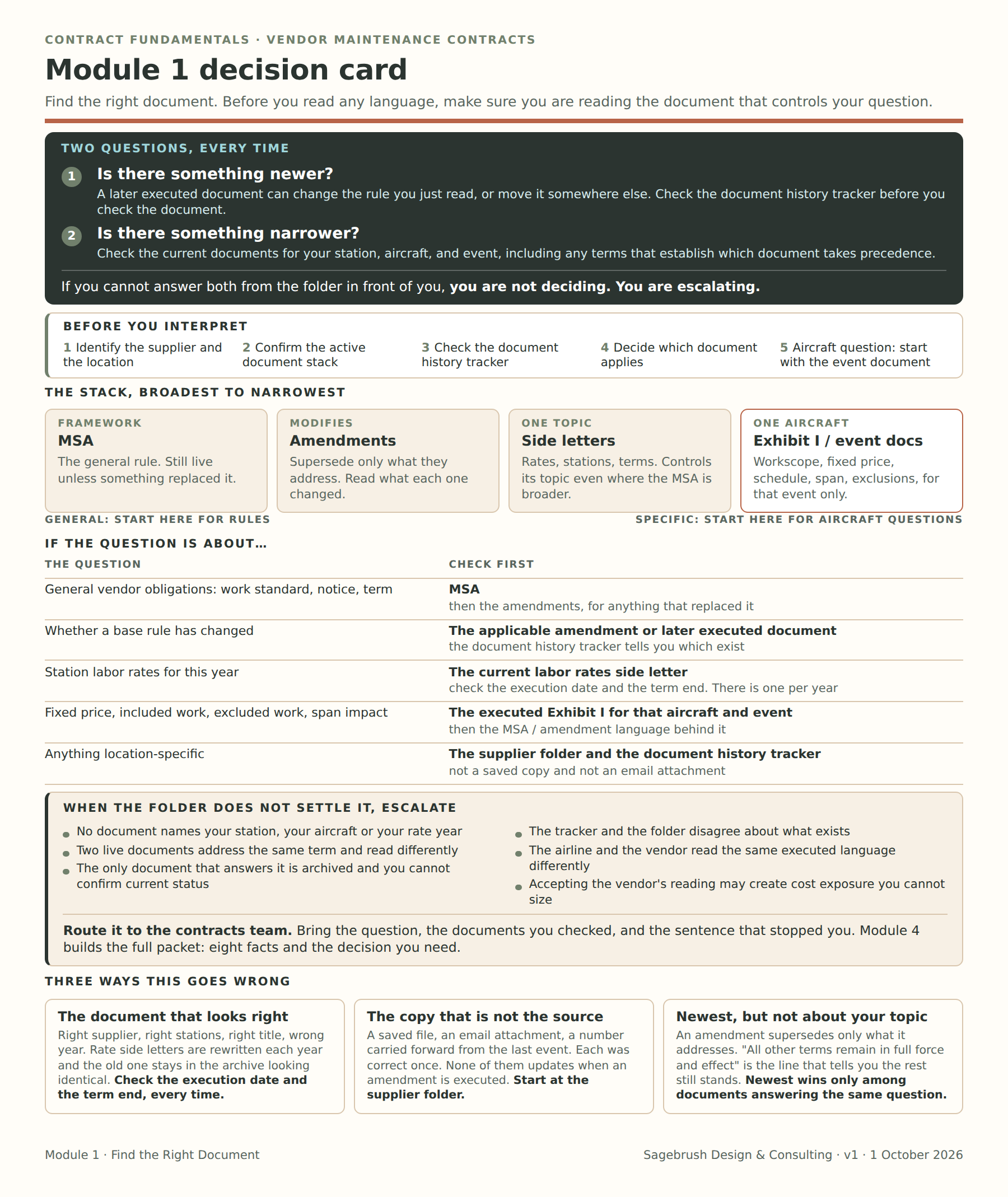
The decision cards serve as job aids, giving representatives a quick reference to the same steps they practiced in the course. Select a resource to preview it.
The design direction was well received.
A stakeholder reviewer described the work in writing as impressive and aligned with what was needed for a demonstration.
Need technical learning built around real decisions?
I turn complex source material into practice that helps people review information, make decisions, and know when to ask for support.