Course structure
I organized the 11 ELTs around the decisions learners would use in the case.
Learning strategy · digital learning · facilitated application
The pilot showed that learners needed a more guided investigation. I changed the approach. I replaced open discovery with staged evidence and clearer facilitator guidance. I designed 11 eLearning training (ELT) modules in Rise 360, a four-hour instructor-led training (ILT) investigation case, a participant guide, facilitator support, and a job aid for airport operations leaders.
Tools used: Rise 360 · SharePoint · PowerPoint · AI
The problem
I focused the curriculum on how leaders gather evidence, test assumptions, and revise a finding. The ELTs prepare them for a facilitated case where they have to use those decisions in context.
I organized the 11 ELTs around the decisions learners would use in the case.
I built the facilitated case around staged evidence, discussion, a participant guide, and facilitator guidance.
I carried the same framework into the job aid and supporting resources.
Selected digital learning
These examples show learners identifying evidence, testing a decision, structuring facts, and using AI without handing off judgment.
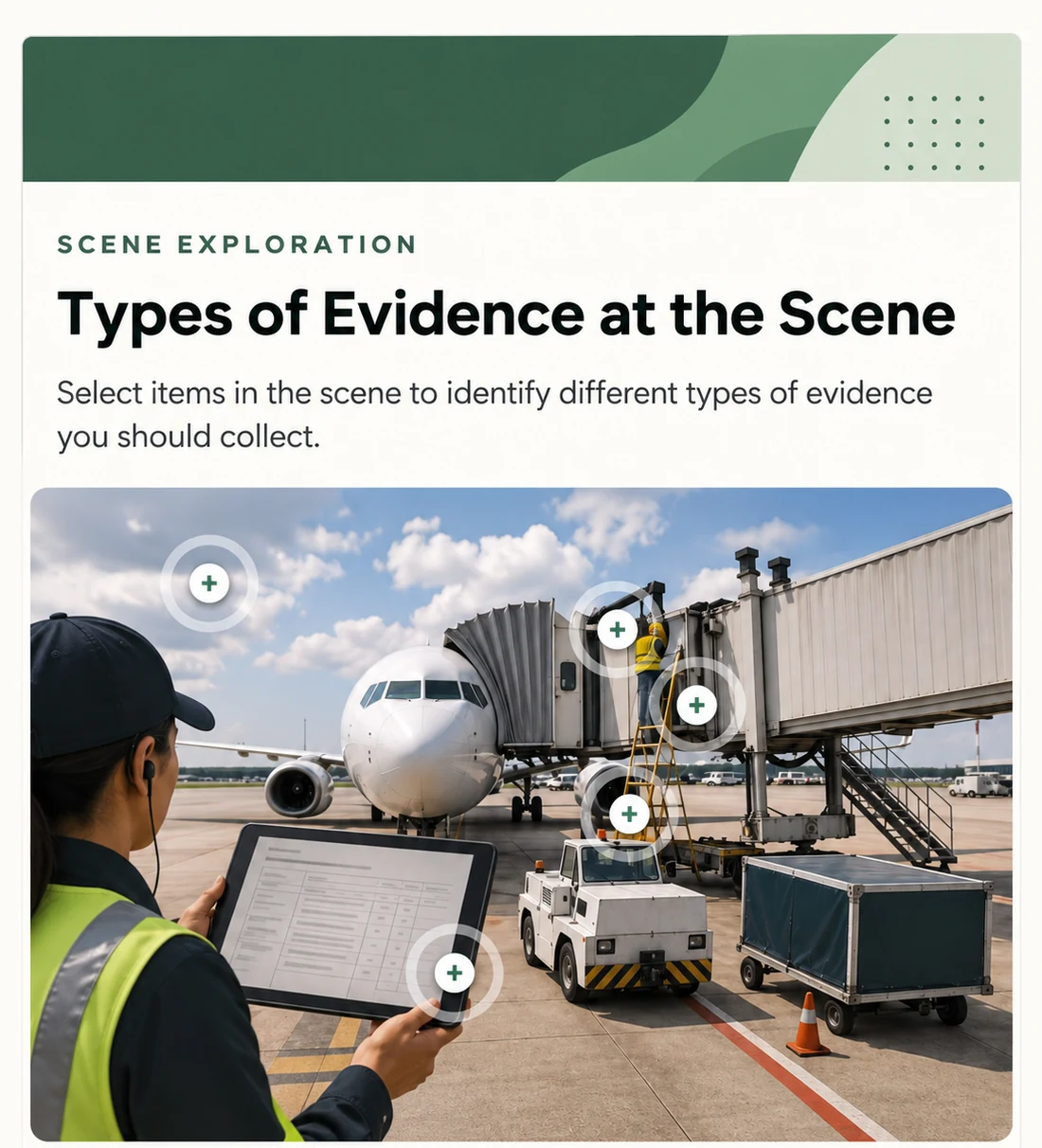
Scene exploration
Learners identify evidence in context before deciding what it means.
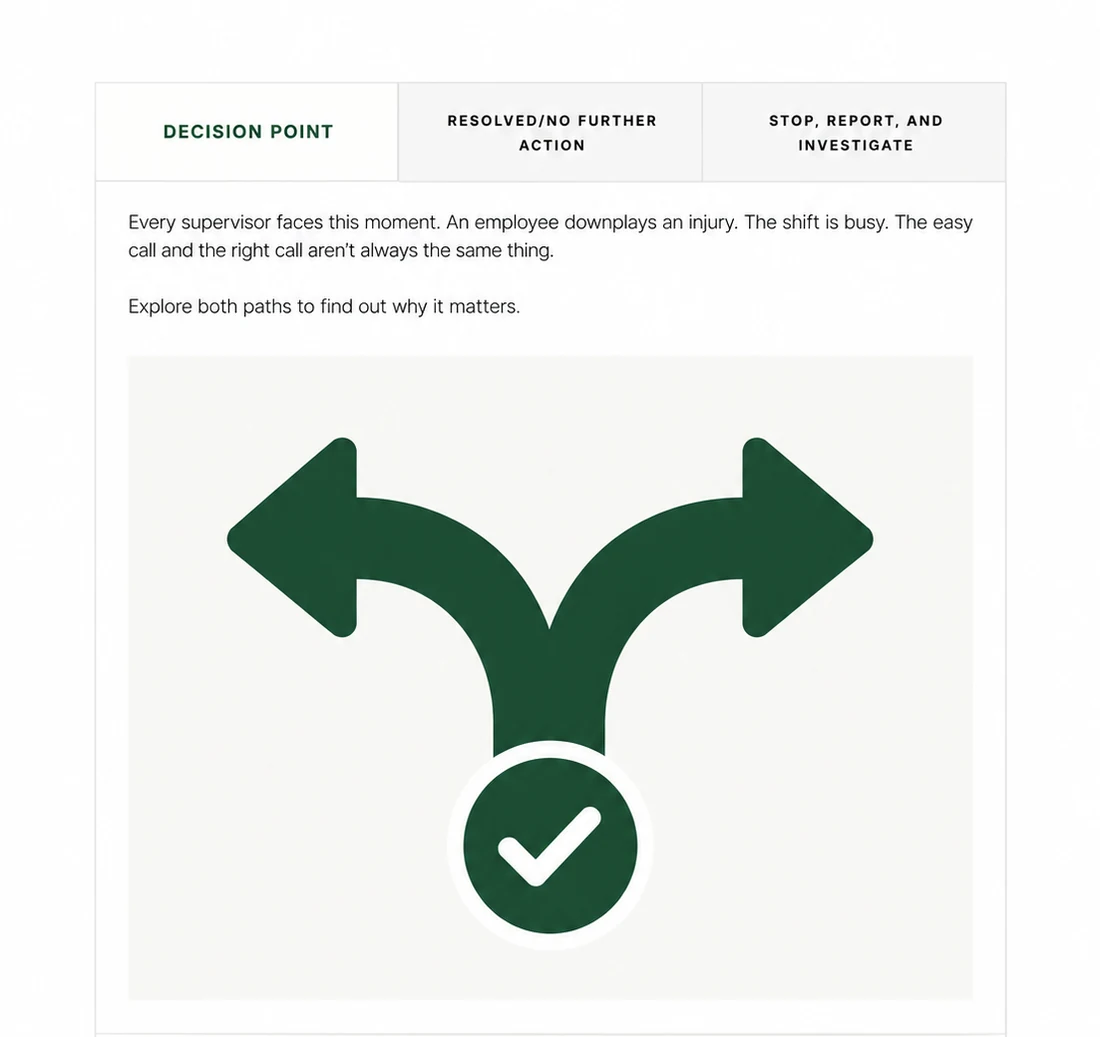
Consequence-based decision
Learners see what changes when a supervisor accepts the first explanation too quickly.
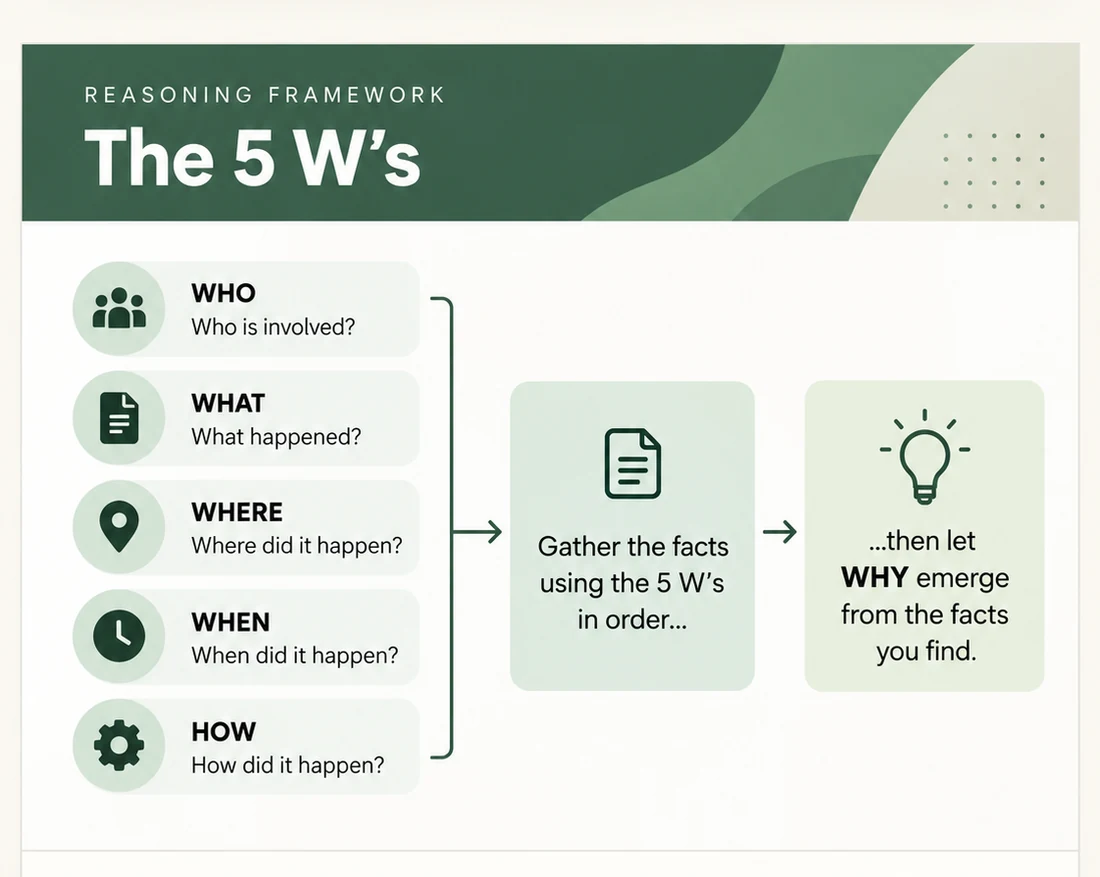
Reasoning framework
The 5Ws help learners establish the facts before explaining why an incident happened.
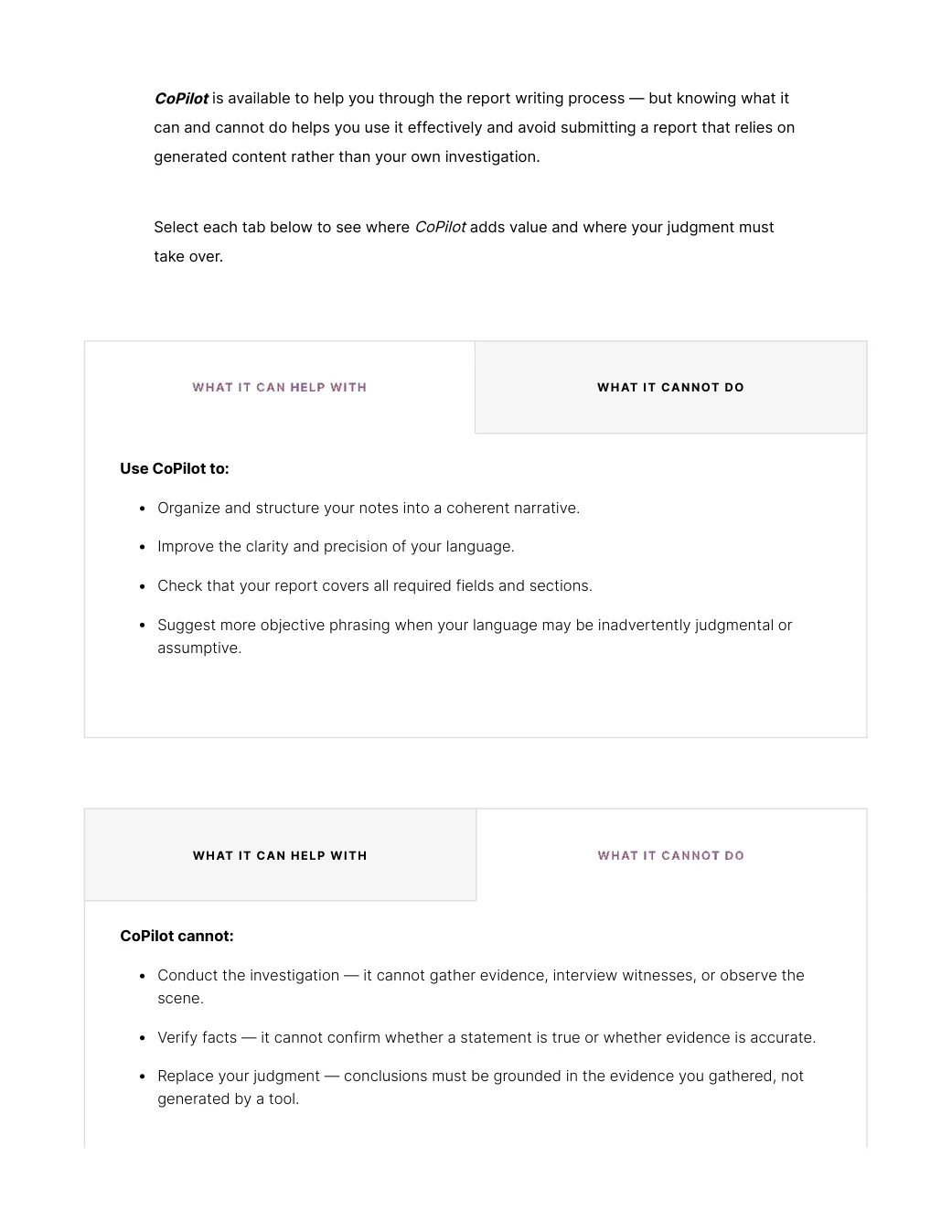
Responsible AI use
AI can help draft. The learner still owns the investigation, verification, and conclusion.
Behind the design
The ELTs establish the investigation habits. The case then requires learners to use those habits while new information is introduced in stages.
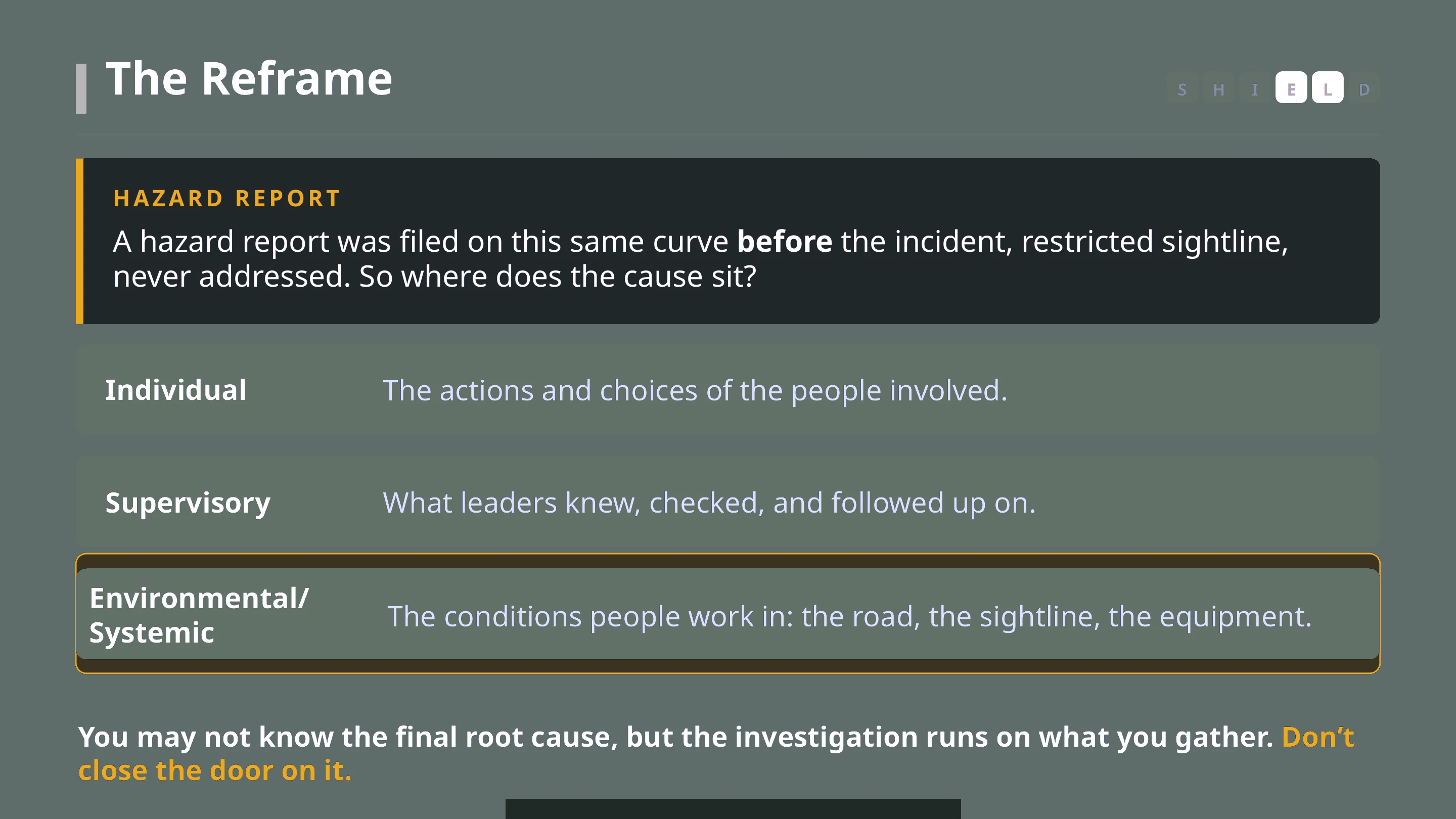
The Reframe
I hold the prior hazard report until the group has examined the scene and built an initial explanation.
Performance and facilitation support
Learners use the participant guide to record their reasoning during the case. The job aid helps them follow the same steps after training.
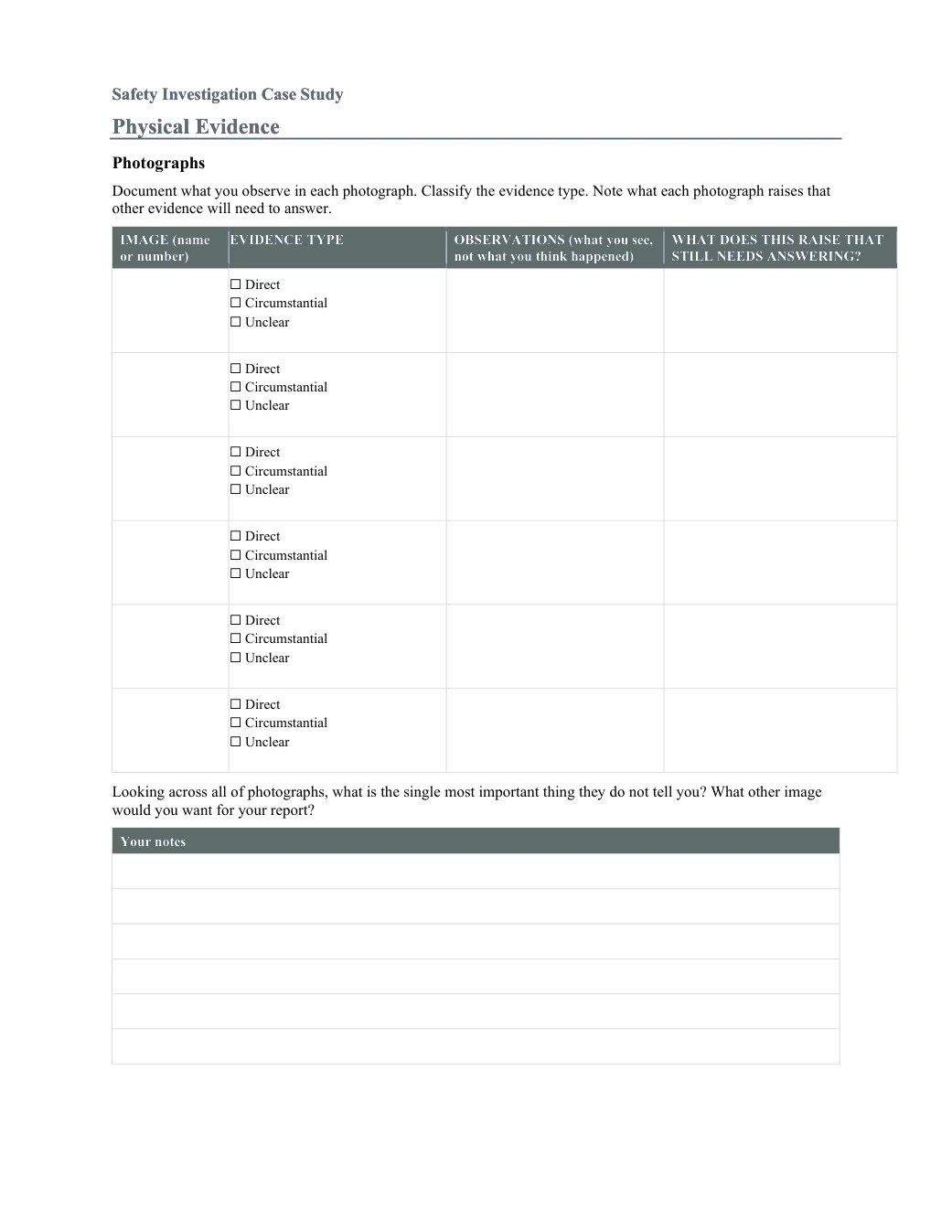
Participant guide
Observation, evidence type, and unanswered questions stay together.
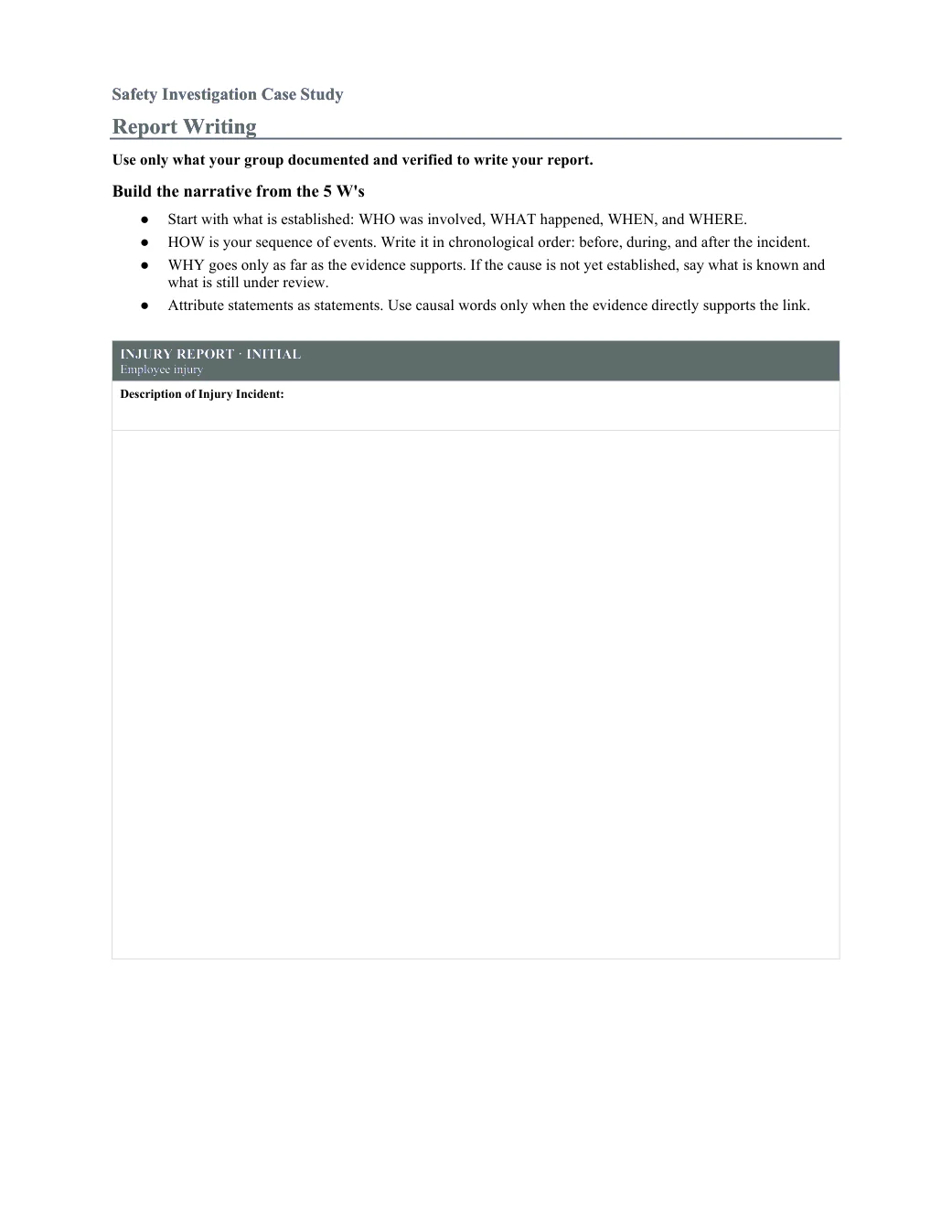
Participant guide
The report is built from documented and verified evidence.
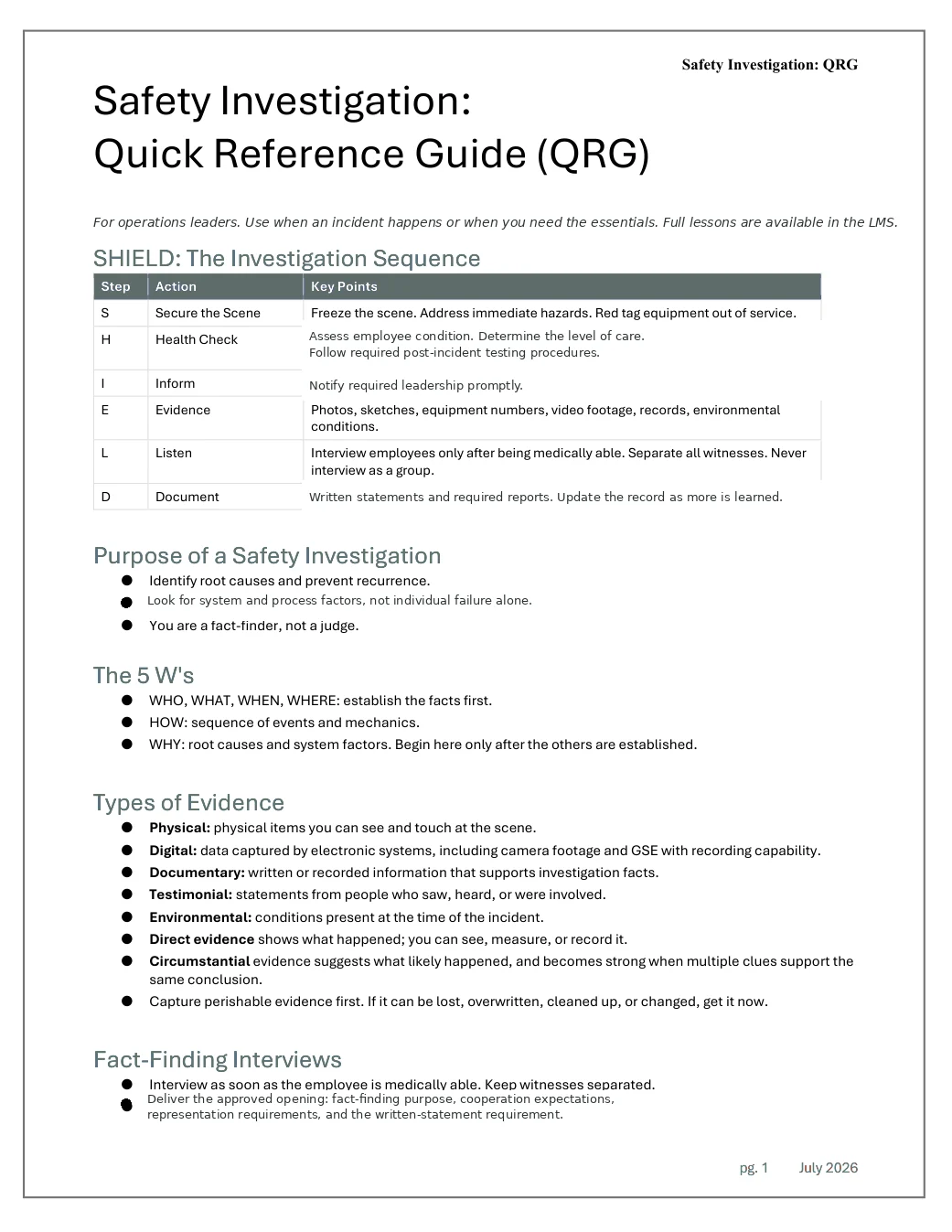
job aid
A quick reference to the investigation steps for use on the job.
Design decisions
The design keeps learners doing the investigation work instead of only reviewing information.
Learners collect first, then interpret.
Decision paths show the consequence of closing too early.
Facts come before the explanation.
AI can support drafting; investigation and judgment stay with the learner.
Learner response
Post-session survey results support relevance, confidence, and intent to apply the training.
I design training, practice activities, and job aids around the decisions people need to make at work.